
Loans Management System: A Complete Guide for Lenders in India
Running a lending business with spreadsheets is like counting cash in the dark. You might get it right most days. But one missed EMI entry, one wrong interest calculation, or one lost borrower file can cost you real money and real trust.
That is where a loans management system comes in. It is software that handles the full loan lifecycle for you, from the moment a borrower applies to the day the last EMI is paid. In this guide, we explain what a loans management system does, who needs it, and what to look for before you buy one.
What Is a Loans Management System?
A loans management system is software that automates the day-to-day work of lending. It stores borrower details, calculates interest, tracks EMIs, sends payment reminders, and creates reports for your team and for auditors.
Think of it as a digital back office for your lending business. Instead of five people updating registers and Excel sheets, the system does the routine work. Your team only steps in for decisions that need human judgment, like approving a loan or handling a special case.
Lenders across India use these systems, from small gold loan shops in Coimbatore to large NBFCs with branches in multiple states.
Who Needs a Loans Management System?
If you lend money in any form, this software is built for you. Common users include:
- NBFCs registered with the RBI
- Gold loan companies
- Microfinance institutions
- Chit fund and finance companies
- Vehicle and personal loan providers
- Co-operative societies and nidhi companies
The size of your business does not matter as much as the volume of loans. Once you cross 100 to 200 active loans, manual tracking starts to break. Errors creep in, collections slip, and month-end reports take days instead of minutes.
Key Features to Look For
Not every loans management system is the same. Here are the features that matter most for lenders in India.
1. Complete Loan Lifecycle Management
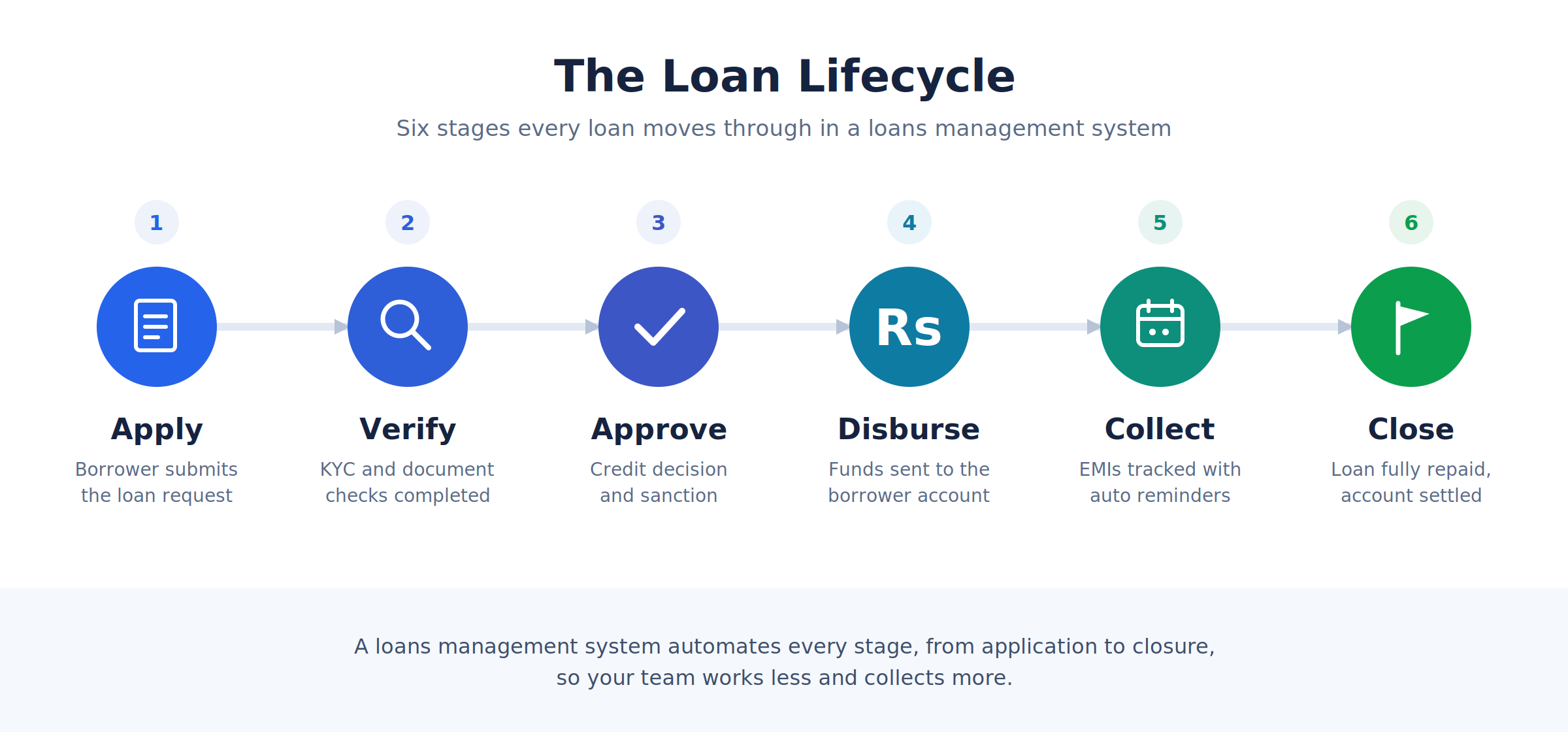
The system should handle every stage in one place: application, KYC verification, approval, disbursement, EMI collection, and closure. If you need a separate tool for onboarding new borrowers, a loan origination system works alongside it to speed up approvals.
2. Automatic Interest and EMI Calculation
Lenders in India rarely stick to one interest method. The software should calculate all of these without manual work. This alone removes most calculation errors and disputes with borrowers.
3. Collections and Recovery Tools
Late payments are the biggest pain in lending. Good software sends automatic SMS and WhatsApp reminders before the due date. For overdue accounts, debt collections software features help your field team track visits, record promises to pay, and follow DPD buckets from SMA-0 to write-off.
4. Borrower Management and CRM
Every borrower interaction should be recorded in one place. A built-in CRM for the financial industry helps your team see the full history of each customer, which improves service and repeat lending.
5. Reports and RBI Compliance
Month-end reports, NPA classification, asset quality reports, and audit trails should come ready-made. This keeps you prepared for RBI inspections and saves your accounts team days of work every quarter.
6. Payment Integration
Borrowers today want to pay by UPI, net banking, or auto-debit. Look for software that connects with payment gateways and digital banking systems so money flows in without manual entry.
Ben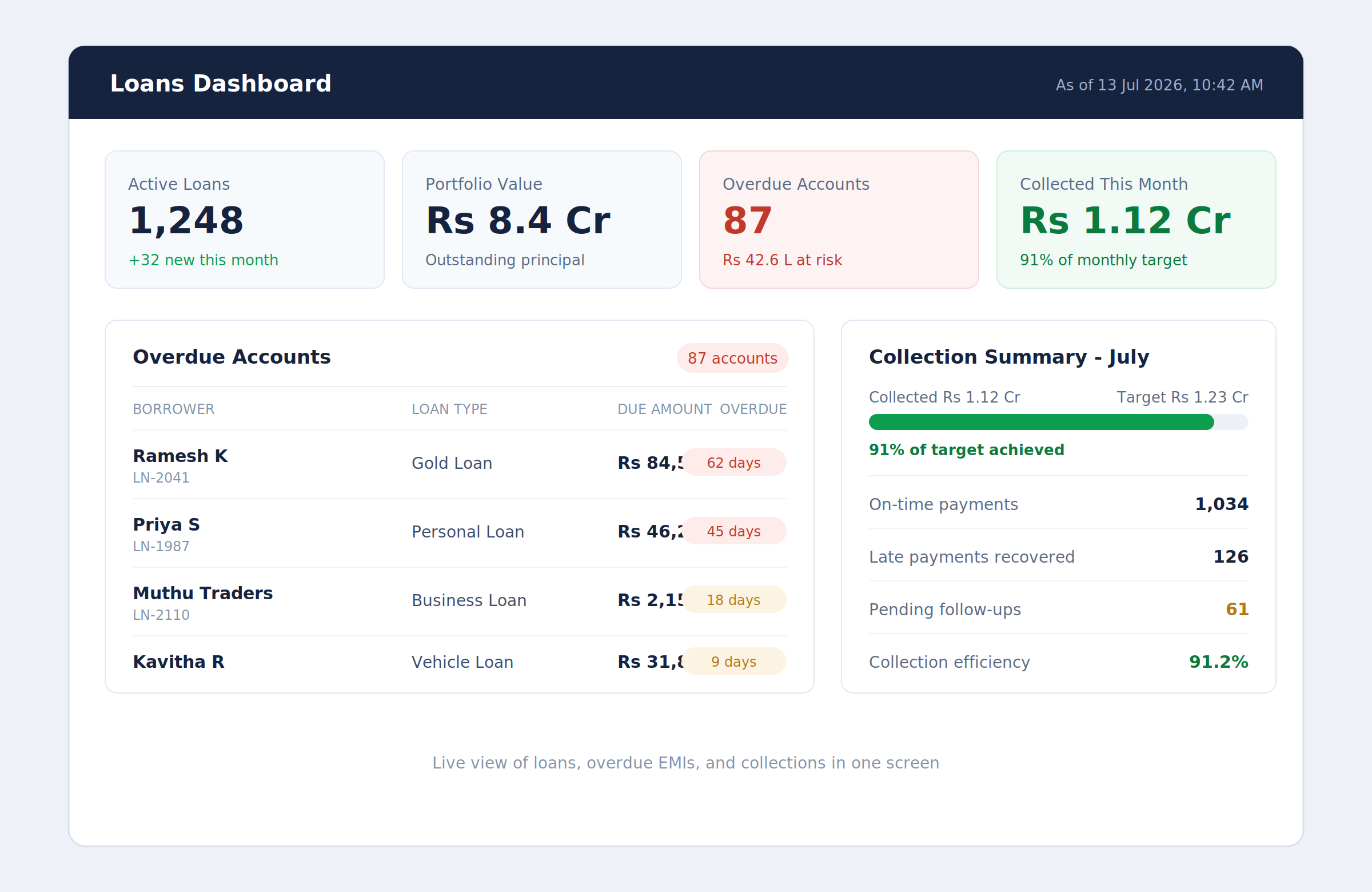 efits: What Changes After You Switch
Lenders who move from manual work to a loans management system see clear gains:
- Up to 90 percent less manual work. Interest calculation, receipts, and reports run on their own.
- Faster collections. Automatic reminders mean fewer missed EMIs and lower NPAs.
- Fewer errors. No more wrong interest entries or missing borrower records.
- Instant reports. Month-end closing takes minutes, not days.
- Easy audits. Every transaction has a digital trail, ready for inspectors.
- Room to grow. Adding a new branch or product does not mean hiring a new back office team.
How to Choose the Right Software
Before you sign up with any vendor, check these five points:
- Is it built for Indian lending? Rules for NBFCs, gold loans, and microfinance in India are specific. Software built for foreign markets often misses local needs like penal interest norms and NPA classification.
- Does the vendor understand your loan products? A vendor serving NBFC managers and finance companies will already know your workflows.
- Can it grow with you? Ask if the system supports multiple branches, multiple loan products, and API connections for services like BBPS bill payments.
- What does support look like? Lending runs six or seven days a week. You need a vendor who picks up the phone, ideally in your language and time zone.
- Is your data safe? Ask about data storage in India, backups, and role-based access so staff only see what they need.
Why Lenders in Tamil Nadu Trust Local Expertise
Coimbatore has quietly become a hub for fintech software in South India. Local software companies here work closely with finance businesses across Tamil Nadu, from Tiruppur and Erode to Chennai and Madurai.
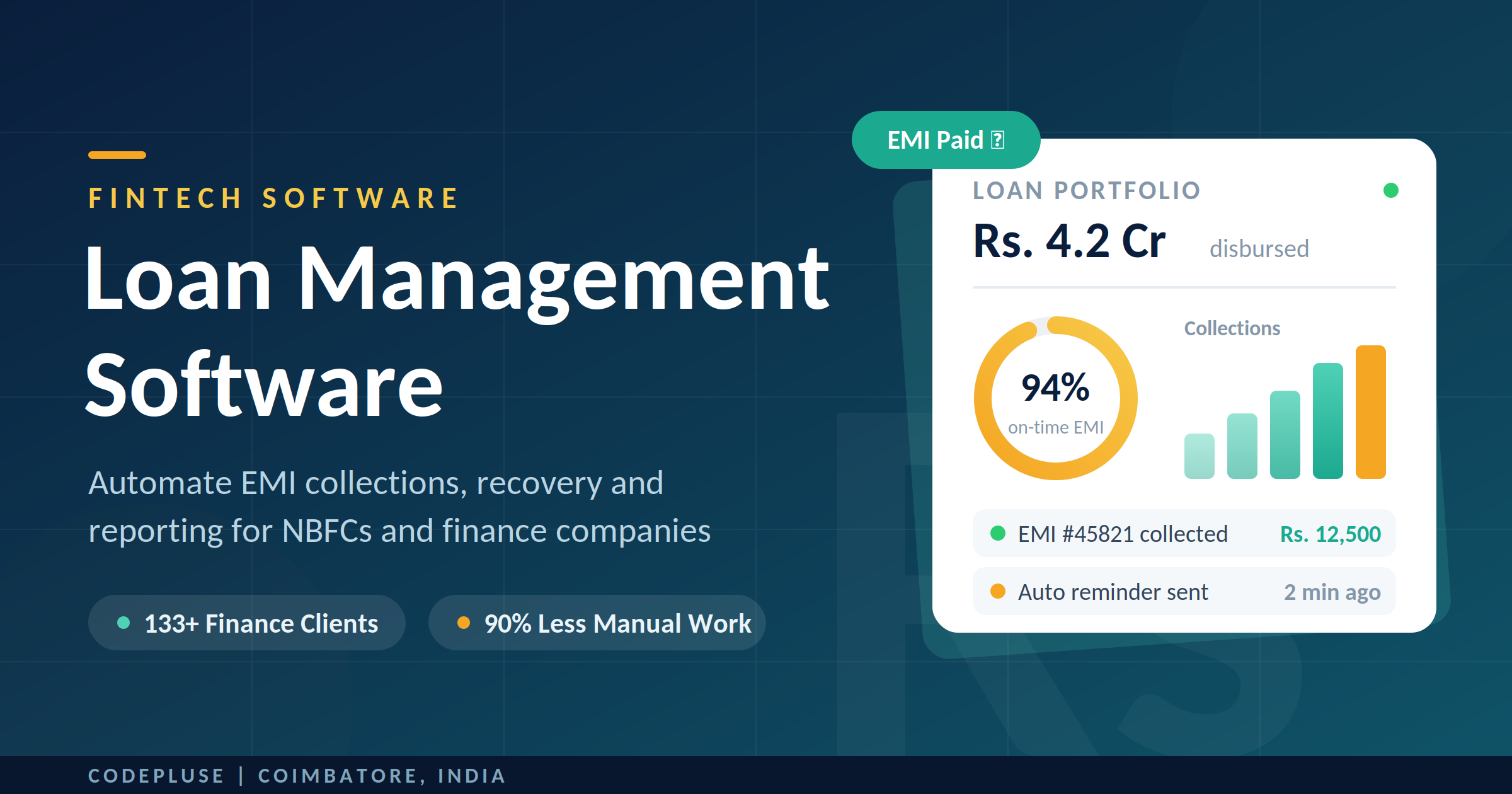
At Codepluse, our team of 80+ developers has built lending software used by 133+ active finance clients across India. Because we work with NBFCs, gold loan companies, and chit funds every day, our loan management system is shaped by real feedback from real lenders, not guesswork.
Frequently Asked Questions
What is the difference between a loans management system and a loan origination system?
A loan origination system handles the front end: application, KYC, credit checks, and approval. A loans management system takes over after disbursement and manages EMIs, collections, and closure. Many lenders use both together for a smooth end-to-end process.
How much does a loans management system cost in India?
Pricing depends on the number of branches, users, and loan products. Most vendors offer packages for small finance companies as well as large NBFCs. Contact the vendor for a quote based on your business size.
Is a loans management system suitable for small finance businesses?
Yes. Even a two-person finance shop starts running like a five-person office automatic EMI tracking and reminders. Small teams actually gain the most, since one person can manage work that used to need three or four.
Does the software help with RBI compliance?
Good lending software creates NPA reports, asset classification, and audit trails automatically. This makes RBI inspections and statutory audits much easier. Always confirm compliance features with your vendor before buying.
Can borrowers pay EMIs online through the system?
Yes. Modern systems connect with UPI, payment gateways, and auto-debit mandates. Payments are recorded instantly, and receipts go to the borrower by SMS or WhatsApp.
Conclusion: Stop Managing Loans, Start Growing Them
A loans management system is not just software. It is the difference between spending your day chasing entries and spending it growing your loan book. If your team still runs on registers and spreadsheets, the switch will pay for itself in saved time and recovered EMIs.
Want to see how it works for your business? Talk to our team at Codepluse in Coimbatore for a free demo of our loan management system, built for Indian lenders and trusted by 133+ finance clients.